The amaran Ray series didn’t quietly arrive, it landed like a new standard. One week creators were juggling heavy COB lights or weak RGB panels, and the next they had a lineup that promised both: real COB power and real color, without the usual bulk. That’s why you keep hearing the name. These lights were built for the way people shoot now, fast, mobile, and often solo, but still serious about image quality.
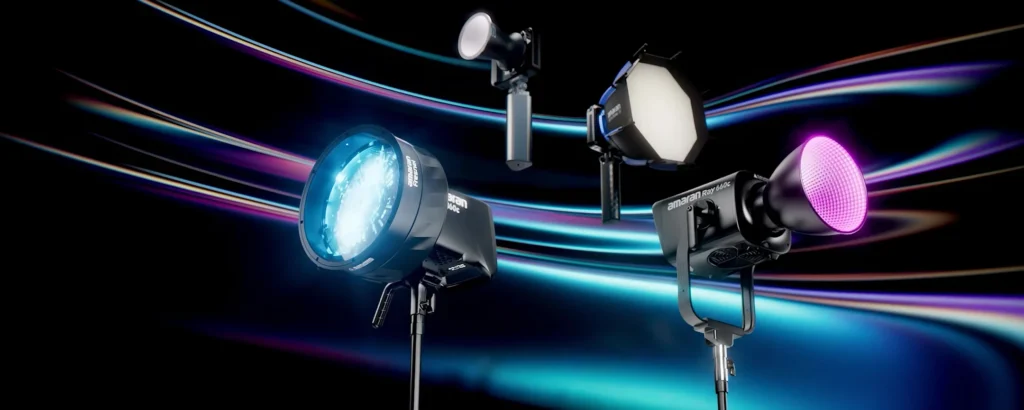
amaran’s new flagship full-color COB family comes in four sizes: the Ray 60c, 120c, 360c, and 660c. Each one is designed to fit a different level of work, from ultra-portable setups to full studio lighting, but they all share the same core upgrade: a new OmniColor light engine that pushes higher output, cleaner color, and better skin tones than older amaran full-color COBs. In simple terms, the Ray series is amaran saying you shouldn’t have to choose between portability and professional results anymore.
Still, a lineup is only useful if it matches your real shoots. Specs can look impressive on paper, but what matters is simple: which Ray light fits your space, your style, and your budget?
Features & Specifications Table of the amaran Ray Series(Ray 60c, 120c, 360c, 660c)
| Feature | Ray 60c | Ray 120c | Ray 360c | Ray 660c |
|---|---|---|---|---|
| Rated output (class) | 60W | 120W | 360W | 660W |
| Power draw | 75W | 140W | 410W | 750W |
| Brightness @1m (5600K, with standard reflector) | 3,760 lux | 6,520 lux | 17,040 lux | 37,900 lux |
| Thickness / form | 4.4 cm slim body | 5.1 cm slim body | All-in-one monolight | All-in-one monolight |
| Weight | 528 g | 599 g | 3.3 kg | 5.7 kg |
| CCT range (standard) | 2,300K–10,000K | 2,300K–10,000K | 2,300K–10,000K | 2,300K–10,000K |
| CCT+ extended range | 1,800K–20,000K | 1,800K–20,000K | 1,800K–20,000K | 1,800K–20,000K |
| Color modes | CCT, HSI, RGB | CCT, HSI, RGB | CCT, HSI, RGB | CCT, HSI, RGB |
| Green/Magenta control | Yes | Yes | Yes | Yes |
| Lighting effects (FX) | 12 effects | 12 effects | 12 effects | 12 effects |
| Weather resistance | IP54 | IP54 | IP54 | IP54 |
| Battery Runtime (Full Output) | 46 min (Peak 75) | 35 min (Peak) | AC primary; V-Mount optional | AC primary; V-Mount optional |
| Mount | Full-size Bowens | Full-size Bowens | Full-size Bowens | Full-size Bowens |
| Power options | AC, USB-C PD, Ace E-Lock batteries | AC, USB-C PD, Ace E-Lock batteries | AC only | AC only |
| Wireless control | Sidus Link app + Bluetooth mesh | Sidus Link app + Bluetooth mesh | Sidus Link app + Bluetooth mesh | Sidus Link app + Bluetooth mesh |
| DMX support | No | No | Yes (USB-C to DMX adapter) | Yes (USB-C to DMX adapter) |
| NFC pairing | Yes | Yes | Yes | Yes |
| FlowTurn control knob | Yes | Yes | Yes | Yes |
| Kit Includes | Softbox, grid, bag | Softbox, grid, bag | Reflector, power cable | Reflector, power cable |
Shared features of the amaran Ray series (Ray 60c, 120c, 360c, 660c)
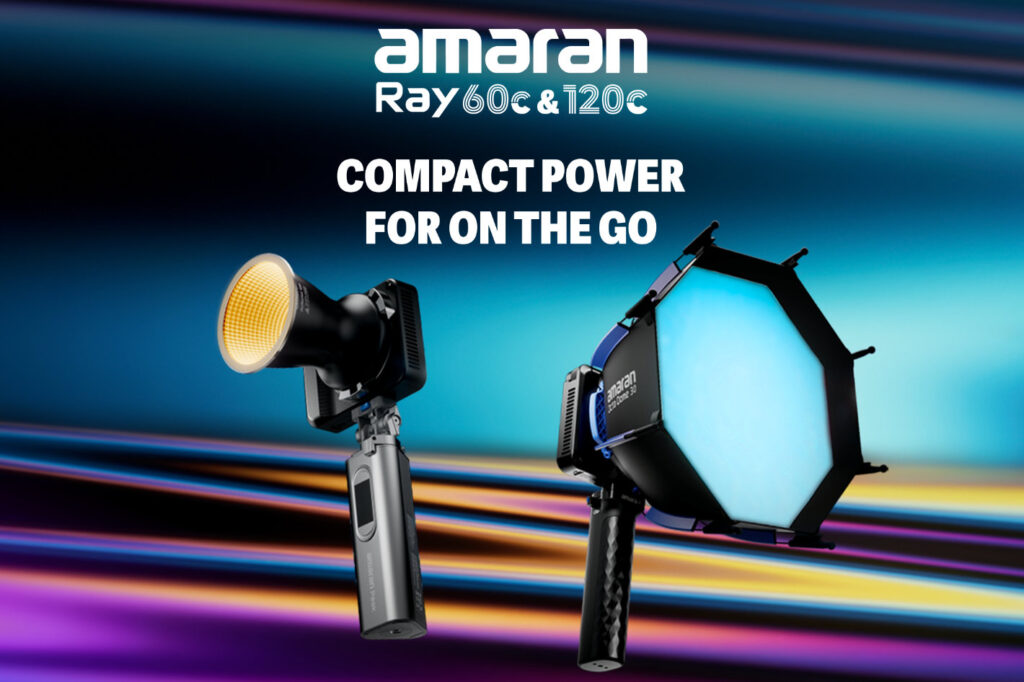
1) Full-color COB light built for shaping
Every light in the amaran Ray series is a full-color COB (chip-on-board) fixture. This matters because COB lights act like real studio sources. They give a focused beam that can be softened, shaped, or controlled with modifiers. So instead of getting “flat panel light,” you get a flexible point source you can use for keys, fills, rims, and background color. This is a big reason the Ray series sits strong in the creator lighting market.
2) OmniColor Light Engine
All four models use OmniColor, amaran’s new light engine. In simple words, it produces a fuller and more balanced spectrum than older RGB COB lights. On camera, skin looks healthier, whites stay neutral, and strong colors look smoother instead of “cheap LED.” If you shoot people, products, interviews, or social content, this color accuracy is the difference between footage that looks finished and footage that needs heavy fixing later.
3) Wide white-light range
Each Ray light can run as a normal white light with a wide color temperature range, roughly from warm tungsten up to cool daylight. They also include an extended range mode that lets you push very warm candle-style looks and very cold icy looks. This gives you more creative control without gels. It also helps when you need to match real locations like warm indoor rooms or bright outdoor shade.
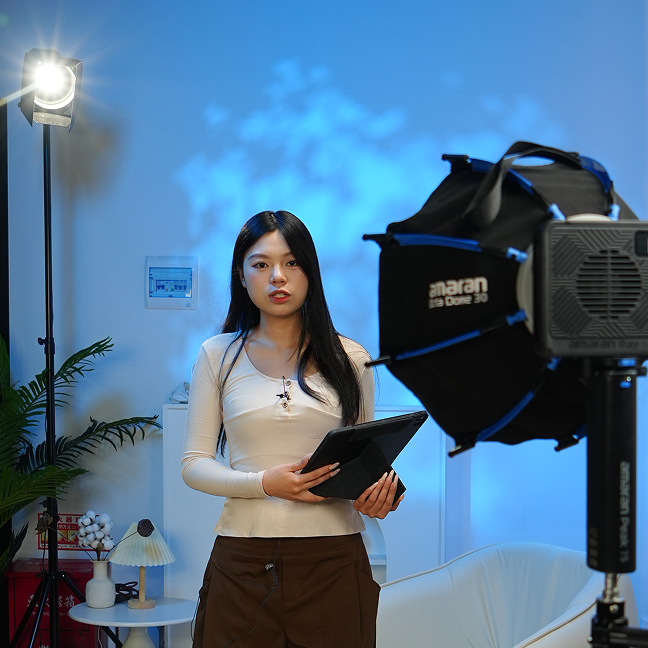
4) Fine tint control to match other lights
All the Ray lights include green and magenta adjustment. Even high-quality LEDs can lean slightly green or pink in some rooms. With tint control, you can correct that shift and match other fixtures. This is especially useful in mixed lighting setups, where you are balancing daylight, house bulbs, or other LED brands.
5) Full color modes and built-in effects
Every model supports the main color modes creators actually use. You can work in CCT for white light, HSI for fast color picking, or RGB for more exact mixes. On top of that, each light has built-in FX options like fire, TV flicker, lightning, and other natural or stylized effects. These features are not just gimmicks. They help you add mood quickly, especially for music videos, short films, and background texture in talking-head videos.
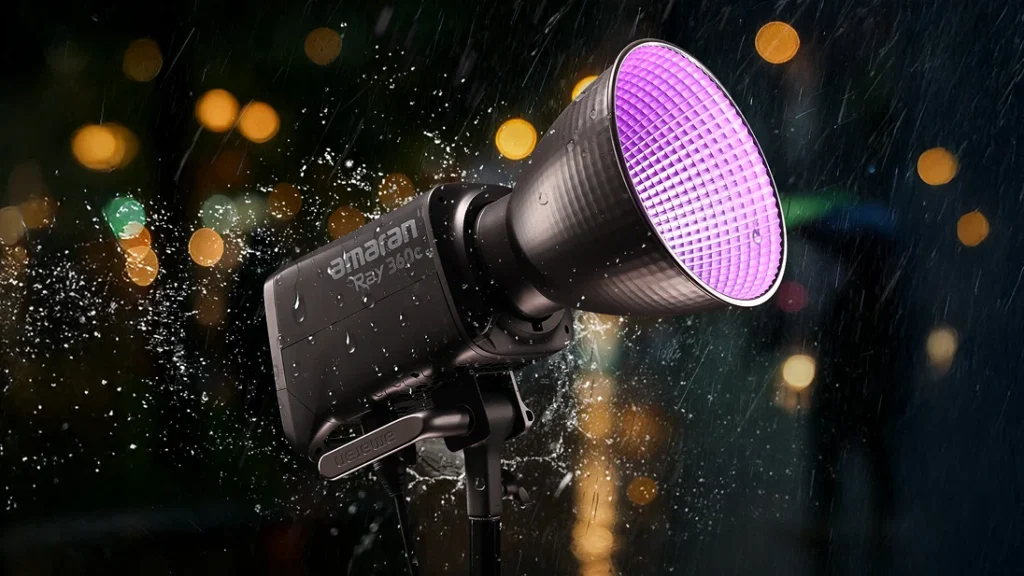
6) IP54 weather resistance
All four lights are rated IP54. In normal English, they can handle dust and light water spray. That means they are safer for outdoor creator work than most budget COB RGB lights. You still shouldn’t soak them or use them in heavy rain, but they are made for travel work, fast setups, and real environments, not just perfect studios.
7) Pro control and universal modifiers
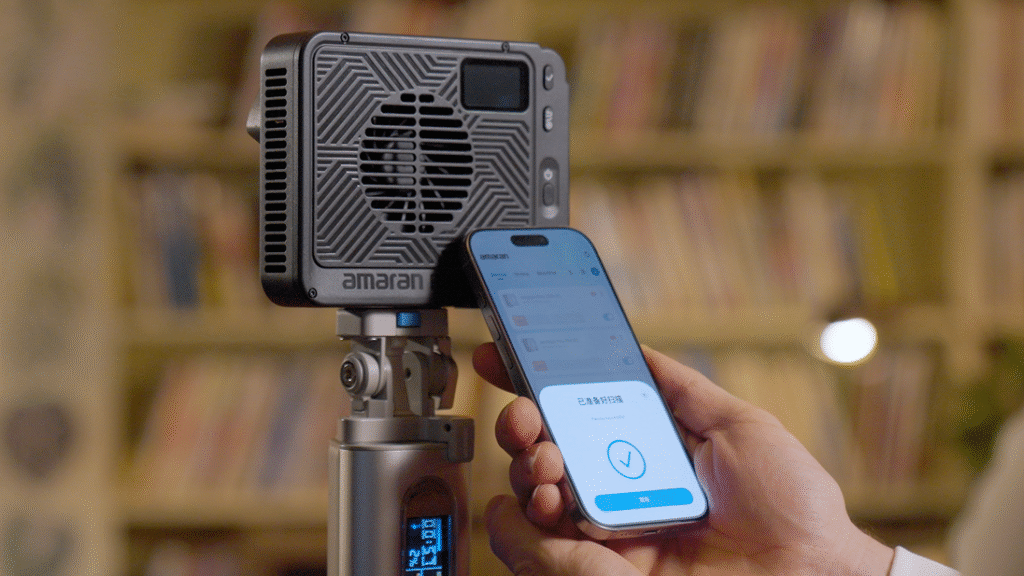
Each Ray light uses a full-size Bowens mount, so it works with most softboxes, lanterns, Fresnels, and reflectors you already own. Control is also modern across the whole line. You can adjust settings on the body, or wirelessly through the Sidus Link app. Pairing is fast thanks to NFC tap-to-connect, and the FlowTurn knob makes changes quick or precise depending on how you spin it. This shared control system is a major reason the amaran Ray series feels like a single family, not four random lights.
Features shared by the amaran Ray 60c and Ray 120c
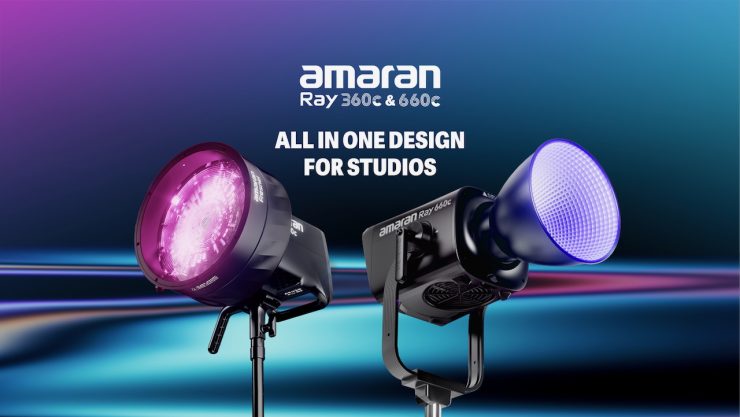
1) Slim, compact “flat-body” design
The Ray 60c and Ray 120c are built with a thin, compact body. They are easy to pack, easy to mount in tight spaces, and simple to move around when you’re shooting solo. If your studio is a bedroom, apartment corner, or small office, these lights fit without taking over the room. They also make a lot of sense for run-and-gun creators who want real COB output without carrying a heavy kit.
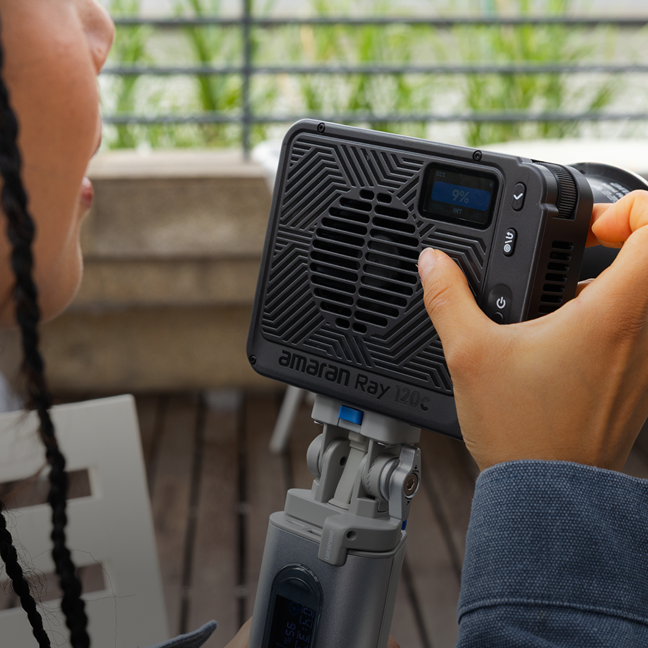
2) USB-C PD and Ace battery support
Both smaller Ray lights can run on wall power, but they also support USB-C PD power. That means strong power banks can drive them on mobile shoots. They also support the Ace E-Lock battery system for a cleaner, quicker battery setup. In real use, this is what makes the 60c and 120c feel like true creator lights. You can light a street interview, rooftop shoot, or quick product session without hunting for sockets.
3) Mini modifier ecosystem
amaran designed smaller modifiers to match the compact form of these lights. So you can keep the whole kit light and travel-friendly. The key idea is simple: you can still control and shape your light well even when you’re moving fast and packing small.
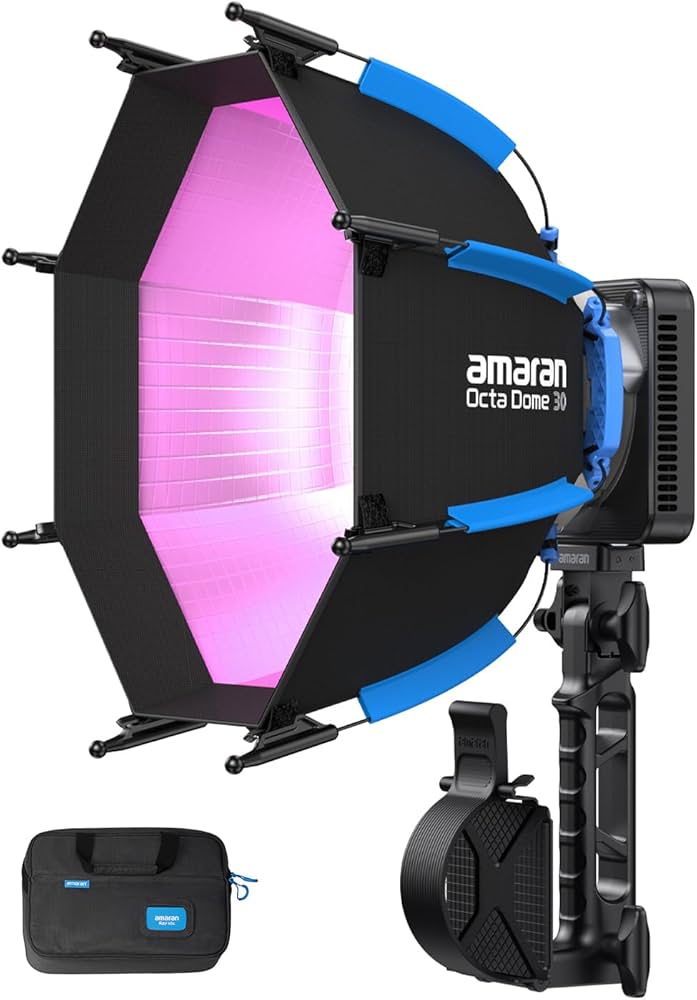
4) Best use-case fit for each
The Ray 60c works best when you need a light you can always carry. It suits travel creators, tiny studios, fast b-roll, and small product setups. The Ray 120c is the step-up choice for most people’s main key light. It has the extra punch needed for softboxes and clean interview lighting while still staying compact.
Features shared by the amaran Ray 360c and Ray 660c
1) High-power monolight build
The Ray 360c and Ray 660c are made as full monolights with much more output. They are heavier, stronger, and designed for larger spaces. This is where the amaran Ray series moves from simple creator lighting into serious studio and indie-film use. These lights keep their strength even when you soften them heavily.
2) DMX control support
Both bigger models support DMX through a USB-C to DMX adapter. If you work with crews or studio control boards, this matters. It lets these lights live in professional environments instead of being limited to app-only workflows. If you don’t use DMX, you can ignore it, but it’s there for growth.
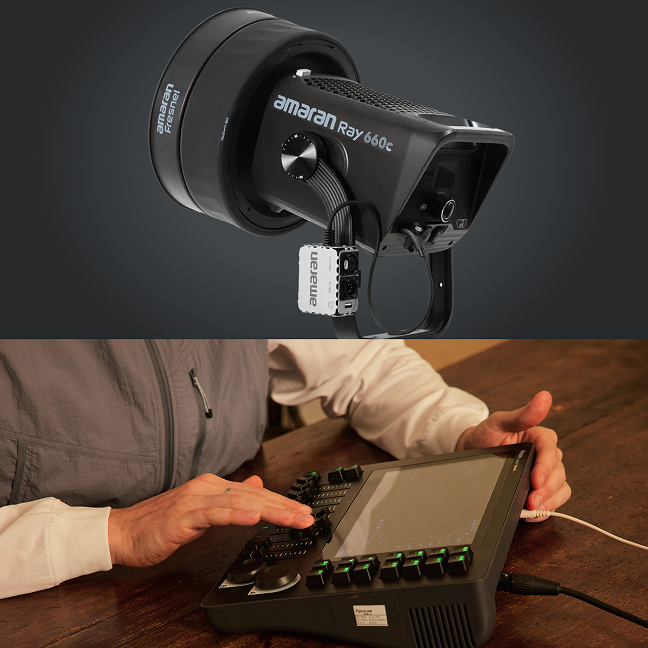
3) Stronger cooling system
High-output RGB COB lights generate heat, so these two models include stronger active cooling. In practice this means they can run long sessions without losing stability. For long interviews, music video setups, or narrative scenes, that cooling system keeps the light reliable.
4) Best use-case fit for each
The Ray 360c is the sweet spot for studios that want strong soft light and full color. It suits bigger softboxes, wider frames, and small crew shoots. The Ray 660c is for high-demand work. It makes sense for large rooms, strong daylight matching, and productions where one light must cover a lot of ground.
Pricing and availability
The Ray series is already on sale through major pro video retailers worldwide. Availability can vary by region, but the lineup is considered a current, active product family.
Typical prices (USD):
- Ray 60c: about $189
- Ray 120c: about $259
- Ray 360c: about $429
- Ray 660c: about $699
Extra note on batteries:
The small-light battery ecosystem (Ace E-Lock / Peak batteries) is rolling out alongside the lights, with wider availability expected around early 2026 in many markets.
CREDIT – https://www.newsshooter.com/2025/11/18/amaran-ray-series/
https://www.redsharknews.com/amaran-ray-series-full-color-cobs
https://www.provideocoalition.com/ray-series-from-amaran-next-gen-cobs-for-creators/