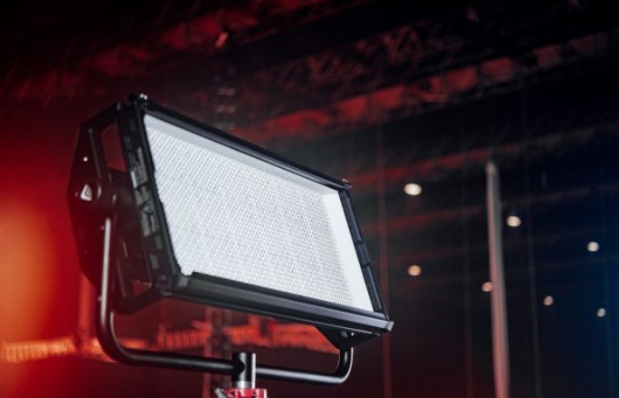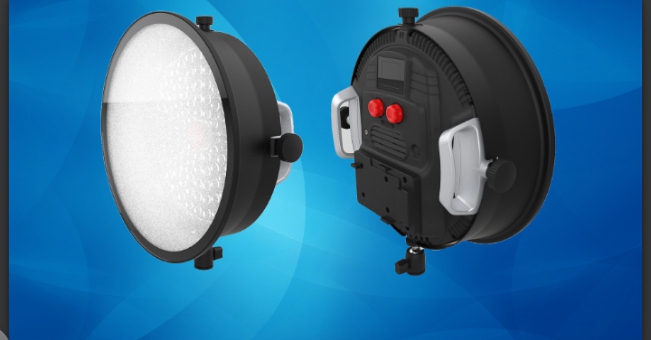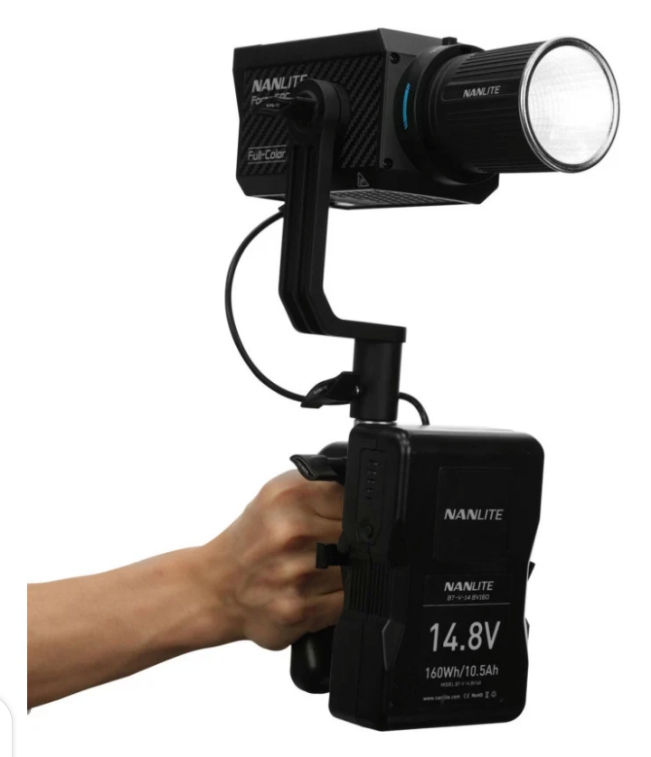
The Nanlux Nebula C8 is not a finished light fixture. It is a color light engine designed to solve one of the hardest problems in film lighting: accurate color and natural skin tones across every color temperature.
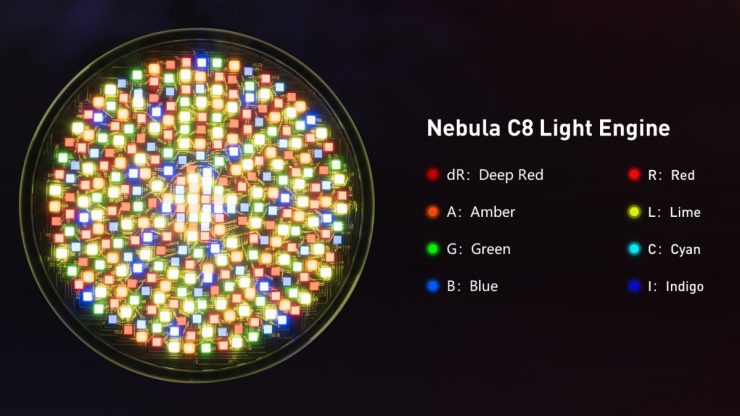
Instead of relying on the usual RGB or RGBW design, NANLUX built the Nebula C8 as an eight-color LED light engine. By expanding both the red and indigo parts of the spectrum, it delivers cleaner whites, richer colors, and smoother color transitions that hold up better on camera.
Key Takeaways
- Eight emitters: deep red, red, amber, lime, green, cyan, blue, indigo, for full visible spectrum coverage.
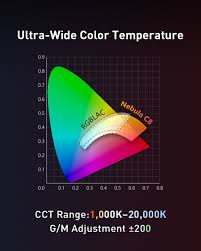
- Widest CCT span: 1,000K to 20,000K, plus ±200 green/magenta tweaks for exact matches.
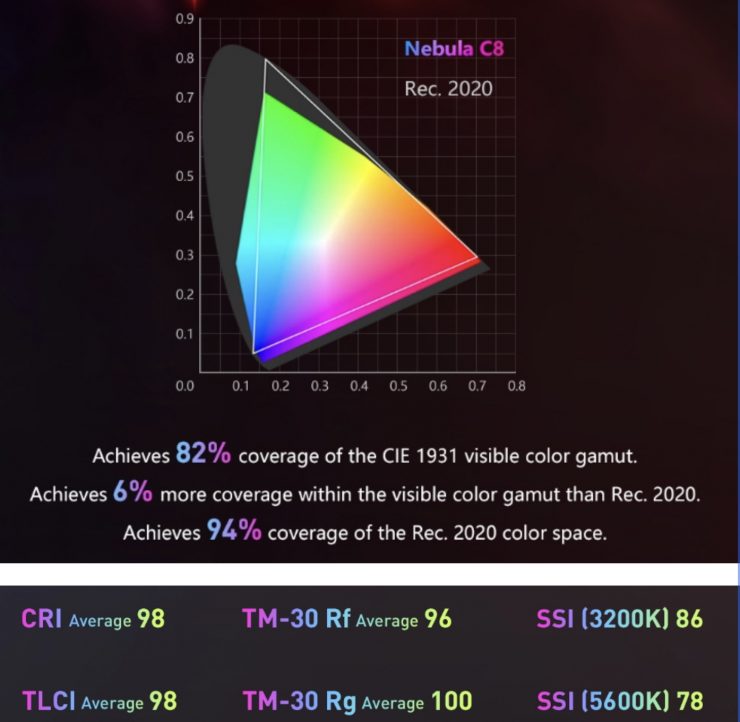
- Top scores: CRI 98, TLCI 98, TM-30 Rf 96/Rg 100, with 82% CIE 1931 and 94% Rec. 2020 gamut.
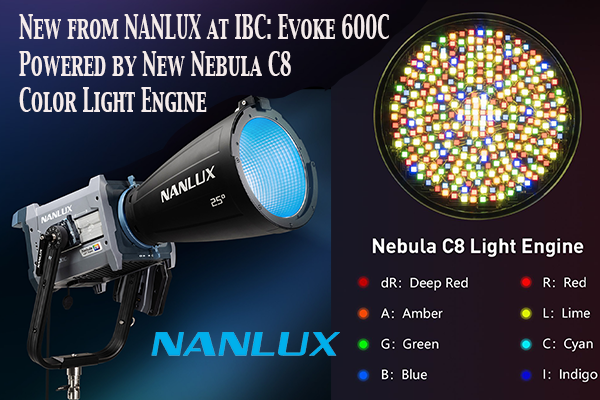
- Powers lights like Evoke 150C (150W, compact) and Evoke 600C (600W, high-power).
- No UV below 400nm for safe, long shoots.
- Beats RGBLAC systems in red depth and color blends, per user feedback.
- IP66 rating on fixtures for dust and water resistance in real setups.
What Is the Nanlux Nebula C8 Light Engine?
The Nanlux Nebula C8 is a full-color LED light engine built for professional film and television production. It uses eight separate LED colors that work together as a single system. These colors include deep red, red, amber, lime, green, cyan, blue, and indigo. Each color plays a specific role in filling gaps that exist in simpler lighting systems.
Most traditional color lights rely on fewer LED colors, which can limit how accurately they reproduce certain parts of the visible spectrum. By adding more carefully selected colors, the Nebula C8 creates a smoother and more complete light output. This approach allows the light to behave more like natural light, especially when transitioning between colors or adjusting color temperature.
Why Eight Colors Are Better Than RGBW
RGBW and RGBWW lights are widely used, but they have known weaknesses. One common problem is that reds often lean toward orange, which can make skin tones look flat or unnatural. Another issue is weak reproduction in the blue and violet range, which can affect highlights and cool tones.
The Nebula C8 solves these issues by adding two important colors: deep red and indigo. Deep red extends the red spectrum, which is essential for healthy-looking skin tones. Indigo strengthens the short-wavelength end of the spectrum, helping blues and purples appear richer and more accurate. Together, these additions allow smoother color transitions and reduce color distortion during fades and effects.

Ultra-Wide CCT Range
One of the most striking features of the Nebula C8 is its extremely wide color temperature range. It can produce light as warm as 1,000K and as cool as 20,000K. To put this into context, 1,000K is even warmer than candlelight, while 20,000K goes beyond typical daylight.
This wide range gives lighting crews far more creative freedom. Ultra-warm tones can be achieved without gels or filters, making firelight and sunset scenes easier to create. On the other end, very cool tones can be used for stylized daylight or high-contrast scenes. The ability to adjust green and magenta tint across this entire range makes it easier to match other lights and cameras on set.
Skin Tone Reproduction
Skin tone is one of the hardest things for any light to reproduce correctly. Human skin reflects a wide range of red wavelengths, and if those wavelengths are missing or unbalanced, faces can look pale, grey, or unhealthy. Many color lights struggle in this area because their red output is incomplete.
The Nebula C8 addresses this problem by extending the red spectrum with a dedicated deep red LED. This creates richer and more natural skin tones both to the eye and on camera. As a result, faces look more alive, and less correction is needed during color grading. For narrative work and close-up shots, this difference becomes very noticeable.

Color Accuracy, Gamut, and Rendering
Technical measurements such as CRI, TLCI, and Rec. 2020 coverage are often used to judge light quality. The Nebula C8 scores highly in all of these areas, but numbers alone do not tell the full story. What matters most is how the light behaves in real production environments.
In practice, the Nebula C8 delivers stable color output that does not shift unexpectedly when changing brightness or color temperature. Whites stay clean, saturated colors remain controlled, and mixed lighting situations are easier to manage. This reliability helps maintain visual consistency across scenes and shooting days.
Safety and Long Shooting Days
Lighting safety is often overlooked, but it becomes critical during long studio sessions. Some indigo LEDs can emit ultraviolet light, which may cause discomfort or health risks over time. NANLUX designed the Nebula C8’s indigo channel to eliminate UV output below 400 nanometers.
This design choice helps protect both the cast and crew during extended use. It also makes the light suitable for enclosed spaces and close-proximity lighting, where safety concerns are higher. This attention to detail reflects the professional focus behind the Nebula C8’s design.
How the Nebula C8 Performs Inside Real Fixtures
Nanlux Evoke 600C
The best way to understand the Nanlux Nebula C8 is to look at how it performs inside actual lighting fixtures. One clear example is the Nanlux Evoke 600C, which is built around the Nebula C8 Color Light Engine.
In this fixture, the Nebula C8 allows the Evoke 600C to achieve very high color accuracy and wide color gamut coverage. NANLUX states that the Evoke 600C reaches about 82% of the CIE 1931 visible color gamut, which is higher than what the Rec. 2020 color space fully covers in the visible range. It is also rated at 94% of Rec. 2020, with a CRI of 98, a TLCI of 98, and strong TM-30 scores. In real-world use, this translates into cleaner whites, richer colors, and more natural-looking skin tones on camera.
Aputure STORM 700x.
To understand what this means in practice, it helps to compare it with a competing fixture like the Aputure STORM 700x. The STORM 700x is a powerful and capable light, but it uses a different light engine design. Aputure lists its Rec. 2020 coverage at around 70%, with CRI and TLCI ratings of 95. Its TM-30 scores are also slightly lower when compared to Nebula C8–based fixtures.
The difference becomes most visible when lighting people. Natural skin tones depend heavily on full coverage of the red spectral range. In many traditional color engines, red light tends to shift toward orange. This can cause faces to look pale or washed out, especially on modern digital cinema cameras. Because the Nebula C8 includes a dedicated deep red LED, it fills this gap more effectively, producing skin tones that look healthier and more natural both to the eye and on camera.
The Nebula C8 uses eight LED colors instead of three or four, allowing it to cover more of the visible spectrum and produce smoother, more accurate light.
In many situations, yes. Its wide color temperature range and tint control reduce the need for physical gels.
Yes, its stable output and precise color control make it suitable for LED volume environments.
CREDIT – https://www.newsshooter.com/2025/12/09/nanlux-nebula-c8-color-light-engine-skin-tone-reproduction/
https://www.cined.com/nanlux-nebula-c8-unveiled-first-eight-color-light-engine-with-1000-20000k-cct/